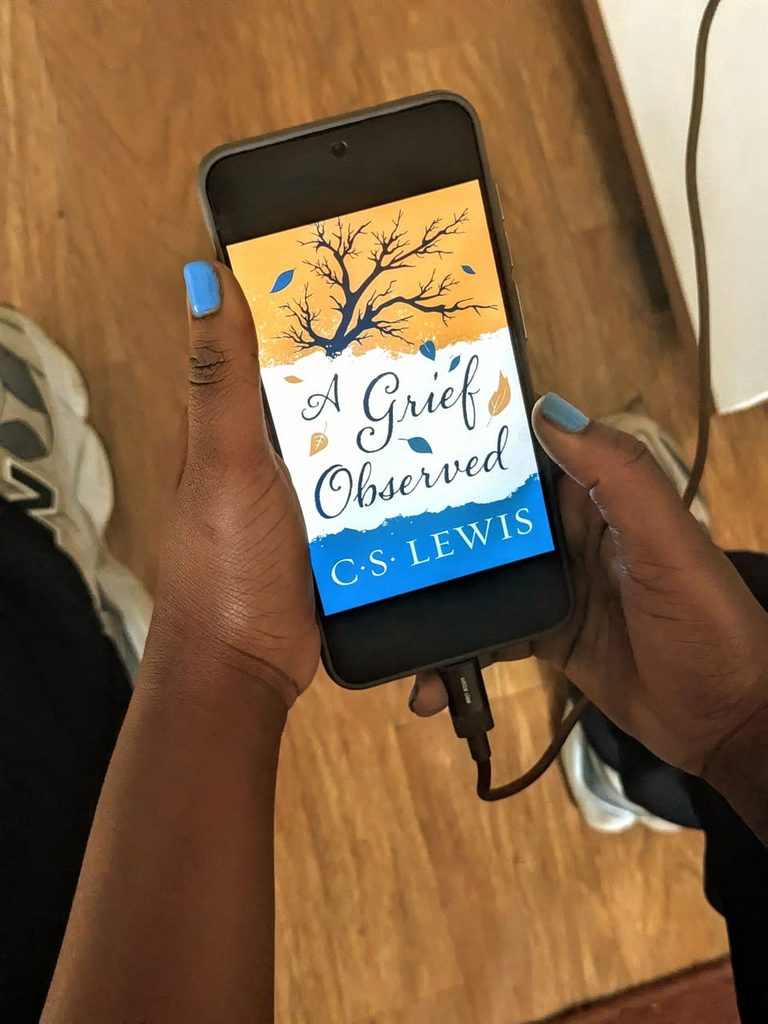
Written with love, humility, and faith, this brief but poignant volume was first published in 1961 and concerns the death of C. S. Lewis’s wife, the American-born poet Joy Davidman. In her introduction to this new edition, Madeleine L’Engle writes: “I am grateful to Lewis for having the courage to yell, to doubt, to kick at God in angry violence. This is a part of a healthy grief which is not often encouraged. It is helpful indeed that C. S. Lewis, who has been such a successful apologist for Christianity, should have the courage to admit doubt about what he has so superbly proclaimed. It gives us permission to admit our own doubts, our own angers and anguishes, and to know that they are part of the soul’s growth.”
Written in longhand in notebooks that Lewis found in his home, A Grief Observed probes the “mad midnight moments” of Lewis’s mourning and loss, moments in which he questioned what he had previously believed about life and death, marriage, and even God. Indecision and self-pity assailed Lewis. “We are under the harrow and can’t escape,” he writes. “I know that the thing I want is exactly the thing I can never get. The old life, the jokes, the drinks, the arguments, the lovemaking, the tiny, heartbreaking commonplace.” Writing A Grief Observed as “a defense against total collapse, a safety valve,” he came to recognize that “bereavement is a universal and integral part of our experience of love.”
Lewis writes his statement of faith with precision, humor, and grace. Yet neither is Lewis reluctant to confess his continuing doubts and his awareness of his own human frailty. This is precisely the quality which suggests that A Grief Observed may become “among the great devotional books of our age.”
Beloved,
Unlike most people who read this book, I did not intentionally pick this up because I was nursing a grief of my own. I am grieving of course. Been doing so for better part of the year, but it is not why I started reading this.
I picked this up because 1) I do have a particular interest in grief in general. 2) It’s nonfiction and I’m trying to read more of those. And 3) It’s very very short.
Will there come a time when I no longer ask why the world is like a mean street, because I shall take the squalor as normal? Does grief finally subside into boredom tinged by faint nausea?
― A Grief Observed, C.S. Lewis
However, despite this being less than a 100 pages, it took me longer than I expected to read it because staring at one man’s raw pain requires you to look away and contemplate every now and then.
A grief observed is a portrait of a man falling apart. It is a personal account of C.S. Lewis grasping at straws as he tries to make sense of his life after his wife – whom he loved dearly – dies. So deep his despair that Lewis – one of the most influential Christian authors and apologists ever known – starts to question his faith that has now become fragile.
The conclusion I dread is not ‘So there’s no God after all,’ but ‘So this is what God’s really like. Deceive yourself no longer.’
― A Grief Observed, C.S. Lewis
This is particularly interesting because twenty years before the death of his wife, Lewis published “The Problem of Pain.” Now I have not read this so take this with a heap of salt, but a quick google search shows that, among other things, this is Lewis’ response to the problem of evil. If you’re unaware, in its most reductive state, the problem of evil begs the question how an all loving and good God can allow evil and suffering to occur. Lewis argues that due to a myriad of factors – ranging from free will to pain as catalyst for spiritual growth – the suffering we go through is not reason enough to reject the belief of a good and all powerful God.
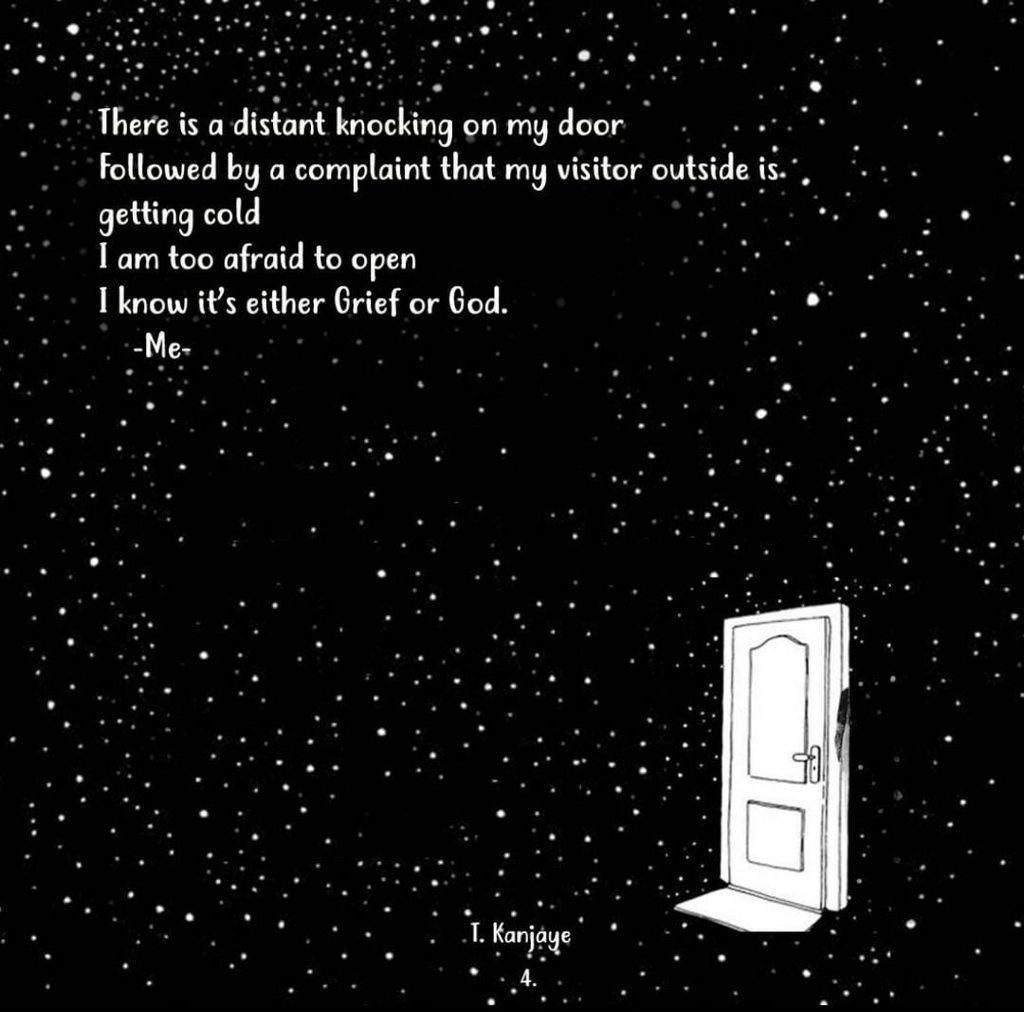
Yet, when the most devastating sort of pain arrives at his doorstep, Lewis crumbles under the weight of it and finds himself grappling on the front lines with a crisis of faith. In “The Problem of Pain”, Lewis talks about pain very theoretically but in “ A Grief Observed” he has to experience it. Told through a series of journal entries, Lewis’ thoughts form, arrange than rearrange all through this book. It is an intimate view of how “could never be me” quickly becomes you under harrowing circumstances.
Where is God?…Go to him when your need is desperate, when all other help is in vain, and what do you find? A door slammed in your face and a sound of bolting and double bolting on the inside. After that, silence.
― A Grief Observed, C.S. Lewis
This is by far the most humane aspect of this book. Lewis married his wife when she had cancer, and I refuse to believe he was not aware that she could die at any time. Yet he was still not prepared for how he would feel.
How easy it is to think you’re solid in your faith and beliefs no matter what they are until you are personally shaken to your core. I often find myself believing I am prepared for the eventual losses that will wreck me but I do not know how true that is. Intellectually I know death is inevitable. I am prepared for these losses to break me. But “A Grief Observed” has made me realise there is no way to prepare oneself for loss. You could think you know yourself enough, until that loss is staring at you and you have to stare it back.
There is nothing we can do with suffering except to suffer it.
― A Grief Observed, C.S. Lewis
Regardless of this, Lewis comes to the realisation that it is human nature to suffer and God [hopefully] remains good even if incomprehensible. He argues that for the doubting Christian that should be enough. And as a woman of little faith, there’s something almost admirable of seeing the mental acrobatics it takes to try to understand and accept God’s plan even in grief.
Very poignant and beautifully written. 3.5 recommendable stars especially if you are grieving and are Christian hoping to relate to someone who questioned God in their time of need.
My idea of God is not a divine idea. It has to be shattered time after time. He shatters it Himself. He is the great iconoclast.
― A Grief Observed, C.S. Lewis